Start with the dog, not the chart
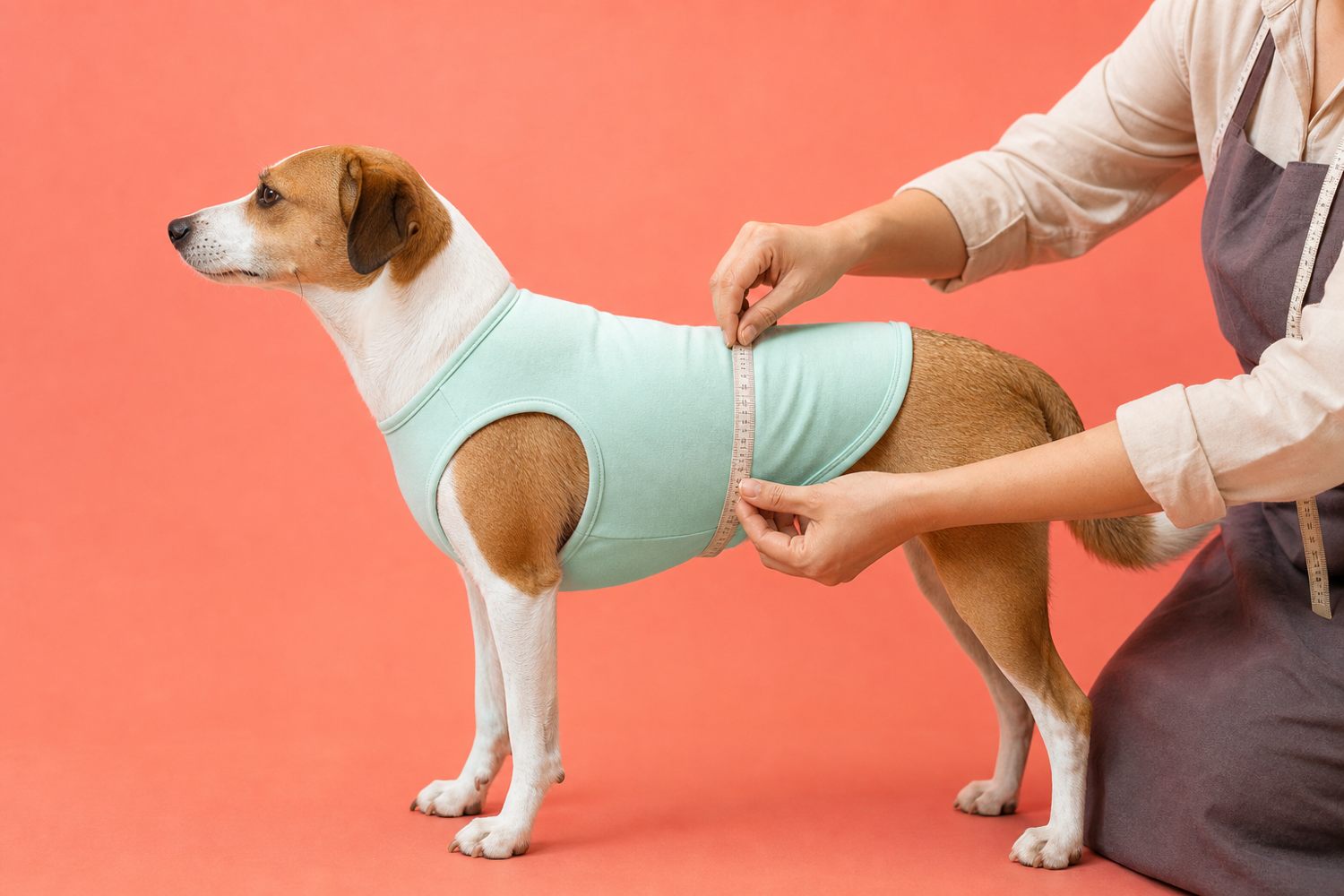
A size label is only a shorthand. The useful information is the body beneath it: chest depth, shoulder shape, back length, coat volume, and the way the dog stands and moves. Two dogs at the same weight can need different sizes, so weight should be a final reasonableness check rather than the deciding number.
A size label is only a shorthand. The useful information is the body beneath it: chest depth, shoulder shape, back length, coat volume, and the way the companion stands and moves. Two companions at the same weight can need different sizes, so weight should be a final reasonableness check rather than the deciding number. In practice, pause between steps, observe the result from more than one angle, and favor the option that asks least of the animal. Record the measurement or observation while it is fresh so the next decision is based on evidence rather than memory.
Set up a calm measuring moment
Choose a familiar, non-slip surface and a time when your dog is awake but settled. Use a soft flexible tape and keep small treats nearby. A second person can reward a steady stand without holding the dog rigidly. If the dog moves away, pause. Several brief attempts produce better information than one stressful wrestling match.
Choose a familiar, non-slip surface and a time when your companion is awake but settled. Use a soft flexible tape and keep small treats nearby. A second person can reward a steady stand without holding the companion rigidly. If the companion moves away, pause. Several brief attempts produce better information than one stressful wrestling match. In practice, pause between steps, observe the result from more than one angle, and favor the option that asks least of the animal. Record the measurement or observation while it is fresh so the next decision is based on evidence rather than memory.
Read the neck correctly
Measure around the base of the neck, where a relaxed collar naturally rests, rather than high beneath the jaw. Keep two fingers between tape and body. For a tee, confirm that the intended neckline can pass over the head without squeezing the ears and then settle without rubbing the throat.
Measure around the base of the neck, where a relaxed collar naturally rests, rather than high beneath the jaw. Keep two fingers between tape and body. For a tee, confirm that the intended neckline can pass over the head without squeezing the ears and then settle without rubbing the throat. In practice, pause between steps, observe the result from more than one angle, and favor the option that asks least of the animal. Record the measurement or observation while it is fresh so the next decision is based on evidence rather than memory.
Find the widest chest point
The chest, or girth, usually determines the size. Wrap the tape around the deepest part of the rib cage just behind the front legs. Keep it level with the floor and snug enough to touch the coat without flattening it. Repeat the reading after your dog takes a few steps; an unusually large difference means the first stance was tense or uneven.
The chest, or girth, usually determines the size. Wrap the tape around the deepest part of the rib cage just behind the front legs. Keep it level with the floor and snug enough to touch the coat without flattening it. Repeat the reading after your companion takes a few steps; an unusually large difference means the first stance was tense or uneven. In practice, pause between steps, observe the result from more than one angle, and favor the option that asks least of the animal. Record the measurement or observation while it is fresh so the next decision is based on evidence rather than memory.
Measure the useful back length
Place the tape at the base of the neck between the shoulder blades and run it to the base of the tail. Do not follow the curve of the tail and do not begin at the collar buckle. A garment may intentionally finish shorter, especially on long-bodied dogs, because clear bathroom access matters more than covering every inch.
Place the tape at the base of the neck between the shoulder blades and run it to the base of the tail. Do not follow the curve of the tail and do not begin at the collar buckle. The piece may intentionally finish shorter, especially on long-bodied companions, because clear bathroom access matters more than covering every inch. In practice, pause between steps, observe the result from more than one angle, and favor the option that asks least of the animal. Record the measurement or observation while it is fresh so the next decision is based on evidence rather than memory.
Account for coat and body shape
A dense winter coat may add meaningful circumference. Deep-chested dogs, broad shoulders, narrow waists, and long backs also change how a standard rectangle of fabric behaves. If chest and back indicate different sizes, prioritize chest comfort and choose the silhouette whose length is closest, rather than squeezing the chest to gain a tidier hem.
A dense winter coat may add meaningful circumference. Deep-chested companions, broad shoulders, narrow waists, and long backs also change how a standard rectangle of fabric behaves. If chest and back indicate different sizes, prioritize chest comfort and choose the silhouette whose length is closest, rather than squeezing the chest to gain a tidier hem. In practice, pause between steps, observe the result from more than one angle, and favor the option that asks least of the animal. Record the measurement or observation while it is fresh so the next decision is based on evidence rather than memory.
Choose ease, not compression
Everyday pet apparel should follow the body without acting like shapewear. Two fingers under the neckline and chest are a useful starting check. The fabric should not bridge tightly between the front legs or pull diagonal wrinkles from the shoulder. Stretch fabric still needs ease; stretch is there to support movement, not excuse an undersized garment.
Everyday pet apparel should follow the body without acting like shapewear. Two fingers under the neckline and chest are a useful starting check. The fabric should not bridge tightly between the front legs or pull diagonal wrinkles from the shoulder. Stretch fabric still needs ease; stretch is there to support movement, not excuse an undersized garment. In practice, pause between steps, observe the result from more than one angle, and favor the option that asks least of the animal. Record the measurement or observation while it is fresh so the next decision is based on evidence rather than memory.
Run a five-minute walk test
After dressing, watch the dog walk, turn, sit, lie down, and shake. Check that the front stride is full, the belly opening stays clear, and the neckline does not travel backward. Look under each arm for bunching or friction. End the test immediately if the dog freezes, scratches repeatedly, pants unexpectedly, or tries to remove the garment.
After dressing, watch the companion walk, turn, sit, lie down, and shake. Check that the front stride is full, the belly opening stays clear, and the neckline does not travel backward. Look under each arm for bunching or friction. End the test immediately if the companion freezes, scratches repeatedly, pants unexpectedly, or tries to remove the garment. In practice, pause between steps, observe the result from more than one angle, and favor the option that asks least of the animal. Record the measurement or observation while it is fresh so the next decision is based on evidence rather than memory.
Recheck after washing and growth
Natural fibers can shift after laundering even when washed correctly. Repeat the fit check after the first wash and periodically thereafter. Puppies, adolescents, seniors, dogs changing weight, and dogs growing or shedding seasonal coats should be measured again rather than assigned their old size by habit.
Natural fibers can shift after laundering even when washed correctly. Repeat the fit check after the first wash and periodically thereafter. Puppies, adolescents, seniors, companions changing weight, and companions growing or shedding seasonal coats should be measured again rather than assigned their old size by habit. In practice, pause between steps, observe the result from more than one angle, and favor the option that asks least of the animal. Record the measurement or observation while it is fresh so the next decision is based on evidence rather than memory.
Know when tailoring is the answer
If one size fits the chest but fails dramatically at the back, or if an unusual shoulder or leg shape makes every standard garment twist, a made-to-measure adjustment may be kinder than repeated returns. Send clear standing measurements and describe the mismatch. Useful tailoring begins with observable fit behavior, not a breed stereotype.
If one size fits the chest but fails dramatically at the back, or if an unusual shoulder or leg shape makes every standard garment twist, a made-to-measure adjustment may be kinder than repeated returns. Send clear standing measurements and describe the mismatch. Useful tailoring begins with observable fit behavior, not a breed stereotype. In practice, pause between steps, observe the result from more than one angle, and favor the option that asks least of the animal. Record the measurement or observation while it is fresh so the next decision is based on evidence rather than memory.