Coordinate; do not duplicate
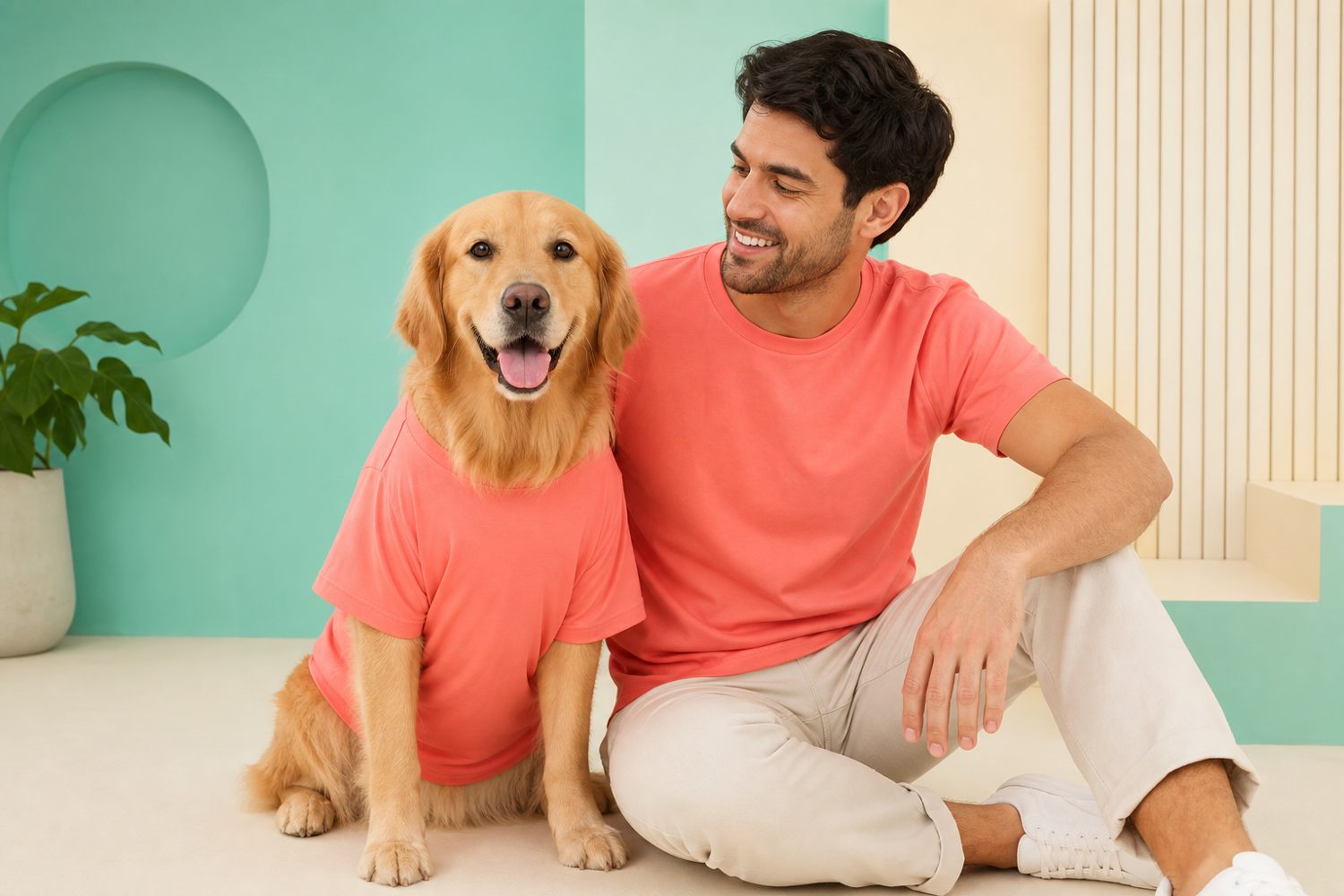
The easiest matching look shares one strong element—usually color—while allowing each garment to suit its wearer. A relaxed human tee and an open-shoulder dog tank can clearly belong together without pretending two bodies need the same cut. This approach looks more considered and keeps comfort decisions independent.
The easiest matching look shares one strong element—usually color—while allowing each garment to suit its wearer. A relaxed human tee and an open-shoulder companion tank can clearly belong together without pretending two bodies need the same cut. This approach looks more considered and keeps comfort decisions independent. In practice, pause between steps, observe the result from more than one angle, and favor the option that asks least of the animal. Record the measurement or observation while it is fresh so the next decision is based on evidence rather than memory.
Choose one anchor color
Start with a color that works in the setting where you plan to wear it. Coral reads warmly against green parks and neutral streets; cobalt photographs cleanly against cream or concrete; mint feels quieter; sunshine carries the most visual energy. Let that anchor appear on both wearers, then keep other pieces restrained.
Start with a color that works in the setting where you plan to wear it. Coral reads warmly against green parks and neutral streets; cobalt photographs cleanly against cream or concrete; mint feels quieter; sunshine carries the most visual energy. Let that anchor appear on both wearers, then keep other pieces restrained. In practice, pause between steps, observe the result from more than one angle, and favor the option that asks least of the animal. Record the measurement or observation while it is fresh so the next decision is based on evidence rather than memory.
Balance proportions
A dog occupies less visual space than an adult human, so identical color coverage can feel uneven. A full human tee may pair better with a pet bandana, while a vivid dog tank can work with a human cap or small accessory. Step several feet away and evaluate the pair as a composition rather than comparing garments item by item.
A companion occupies less visual space than an adult human, so identical color coverage can feel uneven. A full human tee may pair better with a pet bandana, while a vivid companion tank can work with a human cap or small accessory. Step several feet away and evaluate the pair as a composition rather than comparing garments item by item. In practice, pause between steps, observe the result from more than one angle, and favor the option that asks least of the animal. Record the measurement or observation while it is fresh so the next decision is based on evidence rather than memory.
Respect species-appropriate construction
Matching never justifies a poor pet fit. Human sleeves, long hems, drawstrings, buttons, and decorative hardware do not translate safely by simply shrinking them. The pet piece should clear legs, belly, tail, collar, and harness. The shared design belongs in color and mood, not in copying every construction detail.
Matching never justifies a poor pet fit. Human sleeves, long hems, drawstrings, buttons, and decorative hardware do not translate safely by simply shrinking them. The pet piece should clear legs, belly, tail, collar, and harness. The shared design belongs in color and mood, not in copying every construction detail. In practice, pause between steps, observe the result from more than one angle, and favor the option that asks least of the animal. Record the measurement or observation while it is fresh so the next decision is based on evidence rather than memory.
Use texture carefully
Two solid knits usually photograph as a clean pair. If you add texture, keep it on the human side or choose a pet-safe surface without loose loops or embellishment. Avoid anything a dog can chew off. A smooth bandana can connect a human layer to a pet tee without adding bulk around the moving joints.
Two solid knits usually photograph as a clean pair. If you add texture, keep it on the human side or choose a pet-safe surface without loose loops or embellishment. Avoid anything a companion can chew off. A smooth bandana can connect a human layer to a pet tee without adding bulk around the moving joints. In practice, pause between steps, observe the result from more than one angle, and favor the option that asks least of the animal. Record the measurement or observation while it is fresh so the next decision is based on evidence rather than memory.
Dress for the actual plan
A five-minute porch photograph, a café patio, and a mile-long walk create different needs. For movement, prioritize breathable layers and harness compatibility. For an indoor gathering, monitor temperature and provide a clothing-free resting option. Bring a small bag so the pet garment can come off as soon as comfort changes.
A five-minute porch photograph, a café patio, and a mile-long walk create different needs. For movement, prioritize breathable layers and harness compatibility. For an indoor gathering, monitor temperature and provide a clothing-free resting option. Bring a small bag so the pet garment can come off as soon as comfort changes. In practice, pause between steps, observe the result from more than one angle, and favor the option that asks least of the animal. Record the measurement or observation while it is fresh so the next decision is based on evidence rather than memory.
Let the dog opt out
The person may enjoy a coordinated outfit while the dog does not. That is a complete answer. Use a matching leash, blanket, or human accessory instead, or skip the concept entirely. A successful look should preserve the relationship and the activity; it should never depend on pushing through avoidance or stress.
The person may enjoy a coordinated outfit while the companion does not. That is a complete answer. Use a matching leash, blanket, or human accessory instead, or skip the concept entirely. A successful look should preserve the relationship and the activity; it should never depend on pushing through avoidance or stress. In practice, pause between steps, observe the result from more than one angle, and favor the option that asks least of the animal. Record the measurement or observation while it is fresh so the next decision is based on evidence rather than memory.
Photograph at the dog’s pace
Prepare the location and camera before dressing the dog. Work in short sessions, reward natural attention, and use an assistant for safety rather than restraint. Avoid flash close to the face, hot pavement, unstable props, and repeated position resets. Candid walking and resting moments often communicate the match better than a rigid pose.
Prepare the location and camera before dressing the companion. Work in short sessions, reward natural attention, and use an assistant for safety rather than restraint. Avoid flash close to the face, hot pavement, unstable props, and repeated position resets. Candid walking and resting moments often communicate the match better than a rigid pose. In practice, pause between steps, observe the result from more than one angle, and favor the option that asks least of the animal. Record the measurement or observation while it is fresh so the next decision is based on evidence rather than memory.
Keep grooming and contrast in mind
Solid colors interact with coat tone and texture. High contrast makes the garment’s outline obvious; low contrast produces a softer result. Neither is inherently better. Check that long fur does not bunch inside openings and that freshly clipped skin is not exposed to rough seams. Grooming changes may also mean measurements need an update.
Solid colors interact with coat tone and texture. High contrast makes the garment’s outline obvious; low contrast produces a softer result. Neither is inherently better. Check that long fur does not bunch inside openings and that freshly clipped skin is not exposed to rough seams. Grooming changes may also mean measurements need an update. In practice, pause between steps, observe the result from more than one angle, and favor the option that asks least of the animal. Record the measurement or observation while it is fresh so the next decision is based on evidence rather than memory.
Finish with one playful detail
Once fit, color, and context are solved, add a single small accent: a mint bandana beside cobalt tees, sunshine socks with a coral pair, or a violet tote held by the human. One accent creates intention. Five accents create competition, and the dog should remain a participant—not a display rack.
Once fit, color, and context are solved, add a single small accent: a mint bandana beside cobalt tees, sunshine socks with a coral pair, or a violet tote held by the human. One accent creates intention. Five accents create competition, and the companion should remain a participant—not a display rack. In practice, pause between steps, observe the result from more than one angle, and favor the option that asks least of the animal. Record the measurement or observation while it is fresh so the next decision is based on evidence rather than memory.